Syncubator
Originally published on Medium.
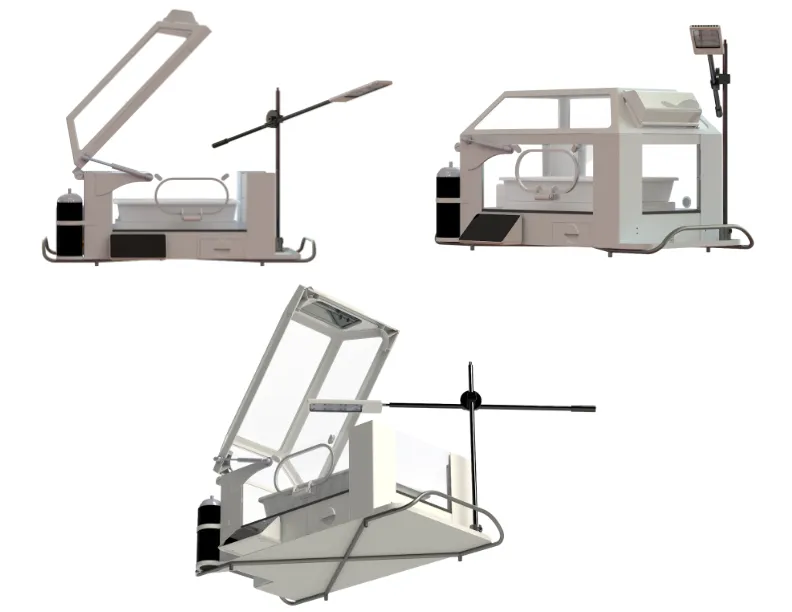
I was in my second year at IIT Mandi. We had an academic course called “Design Practicum”, it’s the flagship course of IIT Mandi in which students are grouped in teams of 6 along with 2 academic mentors to identify and solve a real life problem in under Rs. 30,000. The students were grouped from different disciplines so there was no restriction on what type of problem you have to solve. I met my former co-founders there, Keshav Verma and Dr. Gajendra Singh.
While me and my teammates were busy finding a “complex” problem to solve (because we wanted to do something challenging). Dr. Gajendra was tackling one of the most challenging moments of his life. Dr. Gajendra was blessed with the birth of a baby daughter — a moment of immense joy for his family. However, their happiness was soon tempered by concern, as the baby was born prematurely and required immediate medical attention in the form of a neonatal incubator.
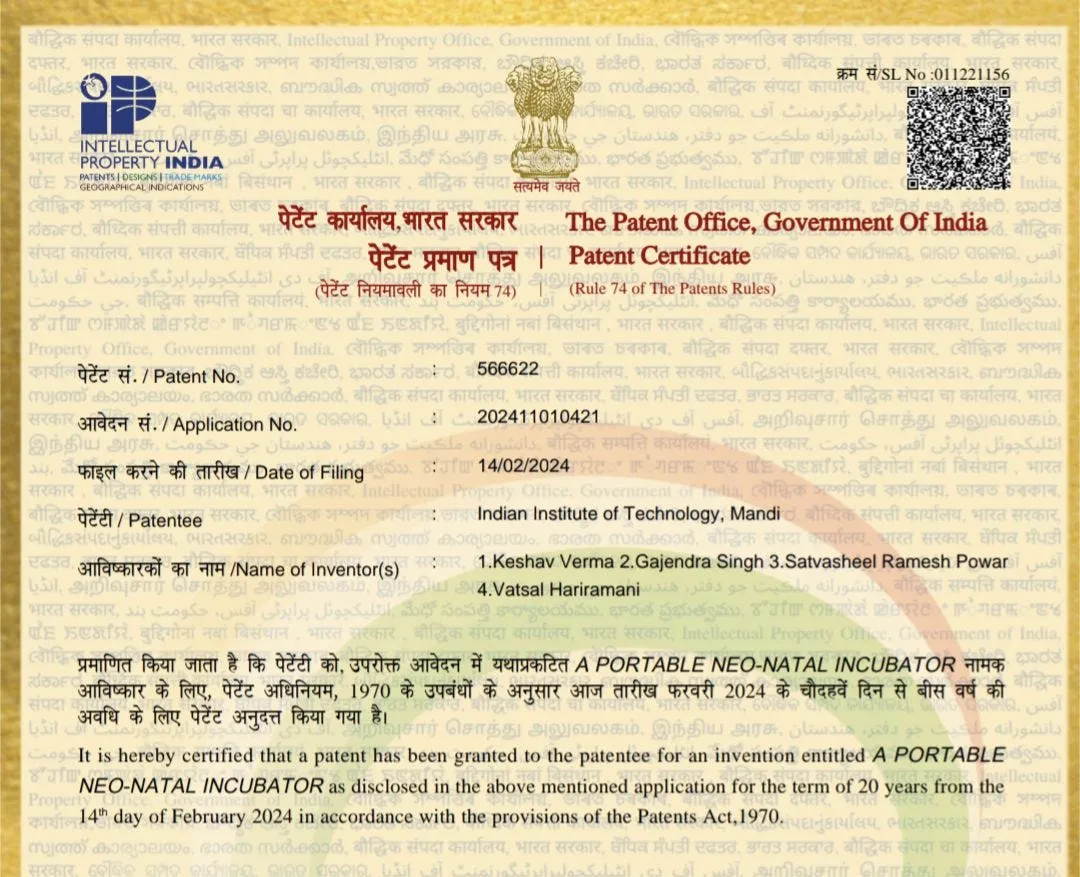
Our granted patent for a portable neonatal incubator
Genesis of Syncubator
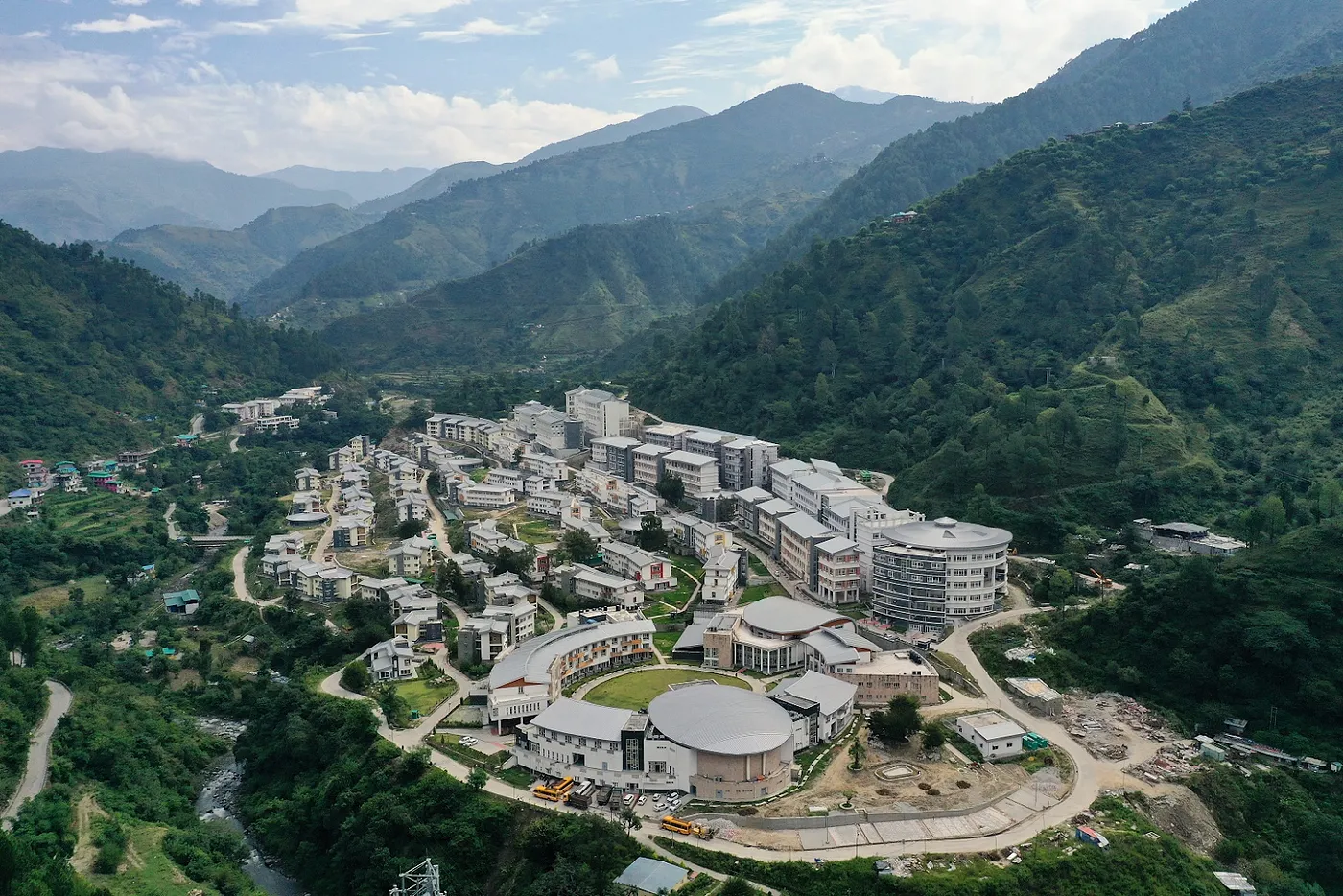
Our Campus
Neonatal incubators are critical for sustaining and stabilizing the lives of premature infants, providing a controlled environment with optimal temperature, humidity, and oxygen levels. Unfortunately, their availability in smaller cities and rural areas is often limited. For our professor, this scarcity became an alarming reality. His family was faced with a daunting challenge: arranging a neonatal ambulance equipped with a life-support system from Chandigarh, an eight-hour drive away.
This harrowing experience highlighted the disparity in healthcare infrastructure and the dire consequences of delayed access to neonatal care. It led us to create an innovative, accessible, and reliable solution that could bridge this gap and provide life-saving care to newborns, regardless of location.
From this moment of urgency and resolve, the idea for the Syncubator was born. What started as a prototype in a design practicum course has since evolved into a mission-driven project, fueled by compassion and a commitment to advancing neonatal care.
As of today I have left the Syncubator team amicably due to personal reasons but it remains the most amazing thing I have ever built.
The Problem at hand
Neonatal mortality, defined as the probability of a newborn dying within the first 27 days of life, is a pressing issue in many developing countries. This metric, expressed per 1,000 live births, provides a clear indicator of the challenges faced by healthcare systems in these regions.
The situation in countries like India is particularly alarming. With a neonatal mortality rate of 18.1 per 1,000 live births, India ranks among the highest globally. This is compounded by the country’s substantial number of preterm births — approximately 3 million annually — placing India at the top of the list for preterm birth rates worldwide. Premature infants are at high risk due to complications such as underdeveloped organs and low birth weight, making access to neonatal care critical for survival.
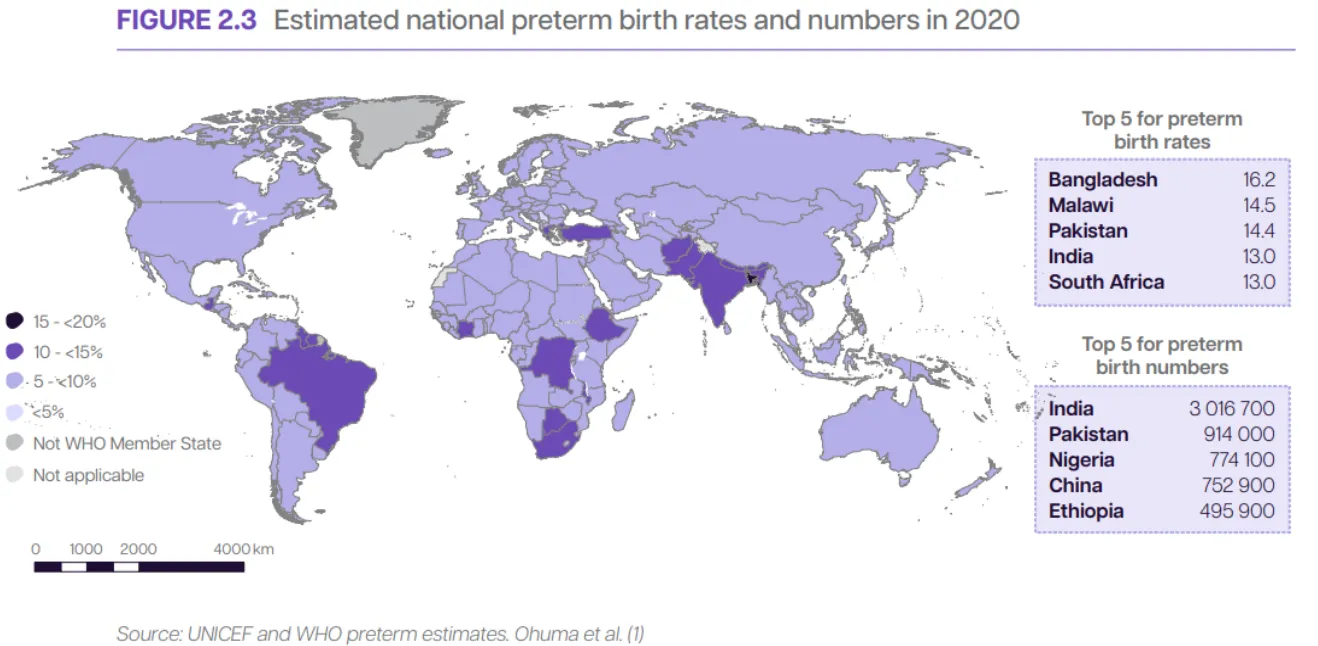
Field Survey and Analysis: Neonatal Healthcare in Himachal Pradesh
As a Himachal Pradesh-based team, we conducted an extensive field survey across hospitals in the state to evaluate the state of neonatal healthcare infrastructure. Our findings revealed significant gaps in the availability of life-saving equipment for newborns, highlighting an urgent need for innovative solutions.
Key Findings from the Field:
1. Absence of Neonatal Incubators:
Currently, no government hospital in Himachal Pradesh has neonatal incubators. This critical equipment, essential for providing thermal and respiratory support to premature and critically ill newborns are entirely missing from the state’s healthcare facilities.
2. Makeshift Solutions for Neonatal Care:
In the absence of neonatal incubators, healthcare providers are forced to resort to makeshift methods:
- Plastic Wraps Over Warmers: Hospitals use plastic wraps over radiant warmers to conserve body heat for newborns. This method, while marginally effective, is far from ideal and does not provide the precise thermal regulation required for premature infants.
- Hand-Controlled Ambu Bags: Instead of oxygen gas cylinders or automated systems for respiratory support, hand-controlled Ambu bags are used to assist newborns in breathing. This manual method is labor-intensive, imprecise, and unsustainable during critical emergencies.
3. High Neonatal Mortality Rates and Underreporting:
Data obtained through an RTI request revealed 461 neonatal deaths reported in Himachal Pradesh (Population: 7 million) during the year 2023–2024. The district of Lahaul and Spiti reported zero neonatal deaths, which likely points to underreporting rather than an absence of neonatal deaths. These findings suggest that the actual burden of neonatal mortality in the state may be much higher.
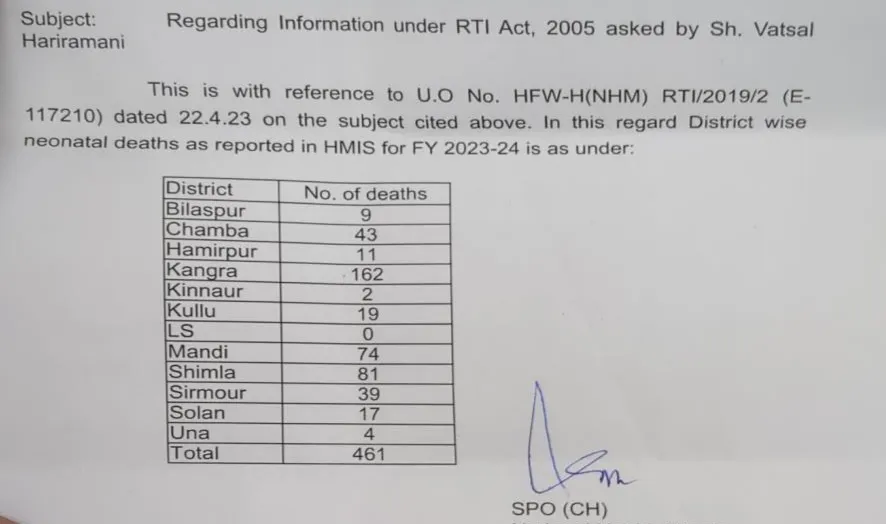
Fig 1: RTI data for district-wise number of neonatal deaths
First Design (Very Fundamental)
We started in March 2023 with a task to create a micro environment enclosure that could:
- Maintain temperature and humidity
- Fit in an ambulance and be mounted atop a regular stretcher and transported.
- Can be connected to the internet for remote monitoring and control
- Be light and shock-proof to bumps and potholes on roads.
With a budget constraint of Rs. 30,000 (course budget). This was our final deliverable:
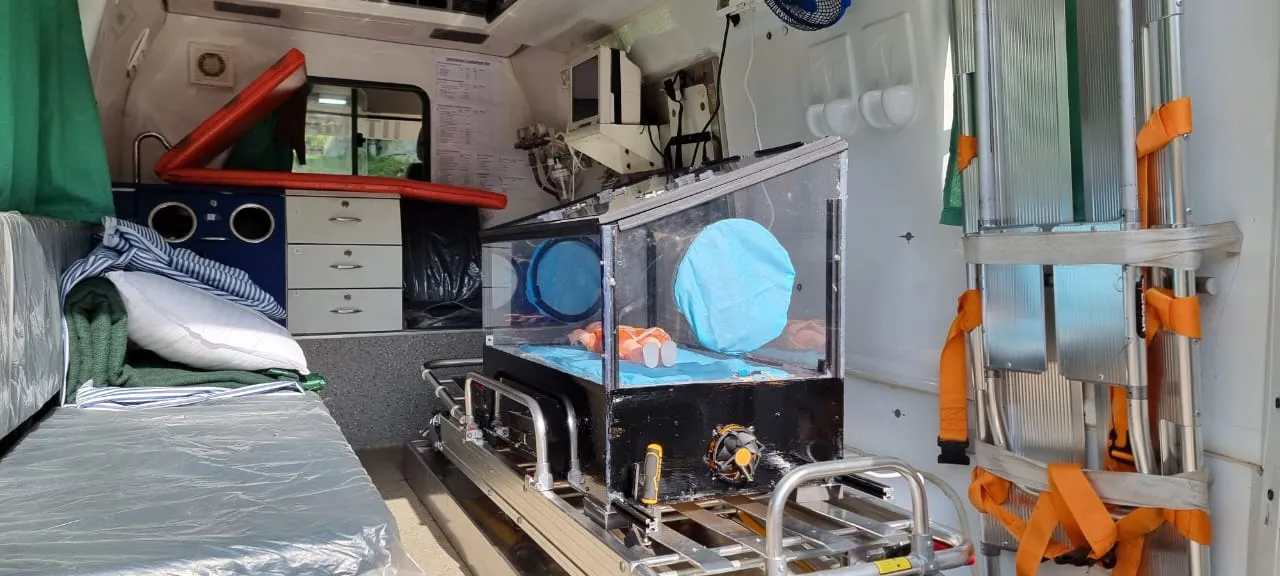
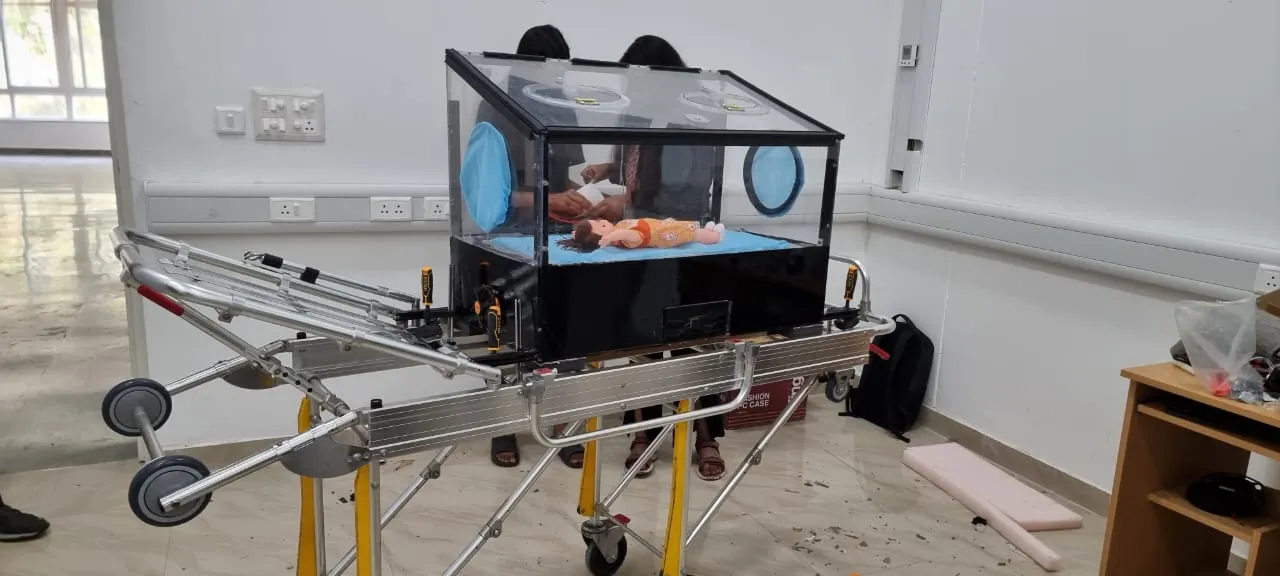
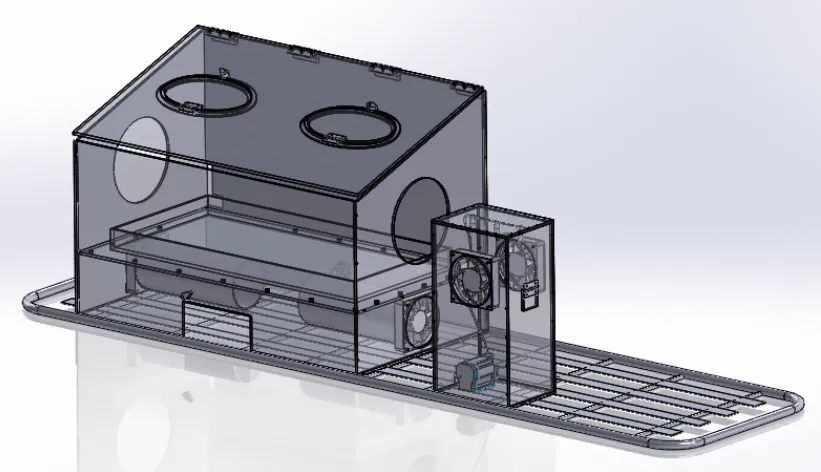
Incubator and humidifier CAD designs
Our starting plan breakdown:
1. Temperature Control: Control the voltage across a nichrome element to heat it and then pass air over it with the help of a CPU cooling fan. The voltage across the element would then be controlled via a PID controller implemented on a microcontroller, each running a webserver forming a WLAN for enabling control/monitoring and modularity over Wi-Fi.
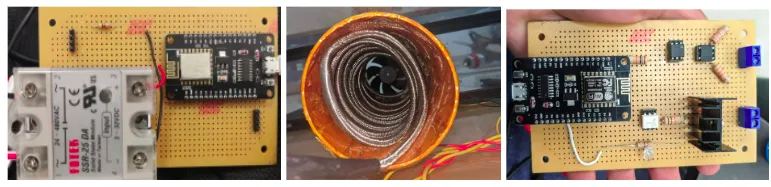
2. Humidity Control: Pump the water through sprinkling valves with the help of a cooler pump to generate a micro mistful environment and then pass air through the mist to gain humidity.
(This approach didn’t work at all and we had to eventually settle for an incubator with non-functional humidity control).
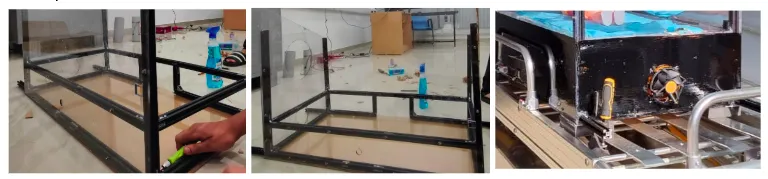
3. Structural Design: Aluminium profiles were used with 6mm thick acrylic sheets along with rubber pads on an s clamp to keep the device light-weight and provide shock absorption.
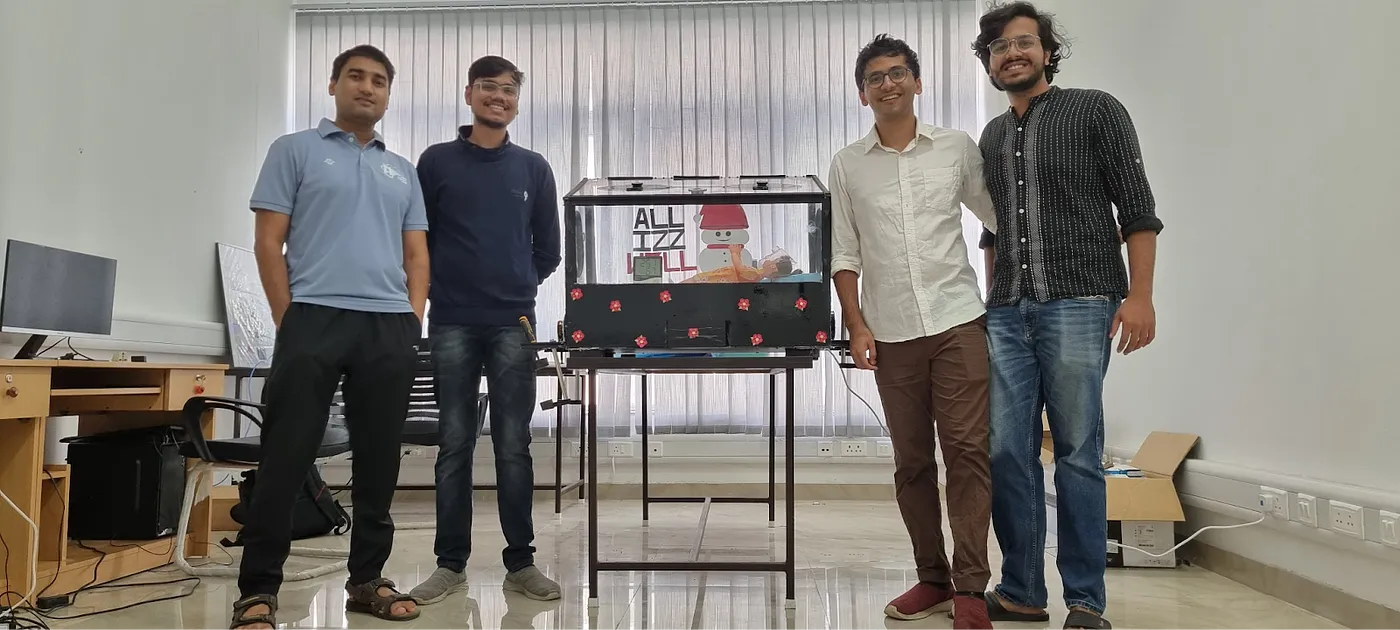
The Team
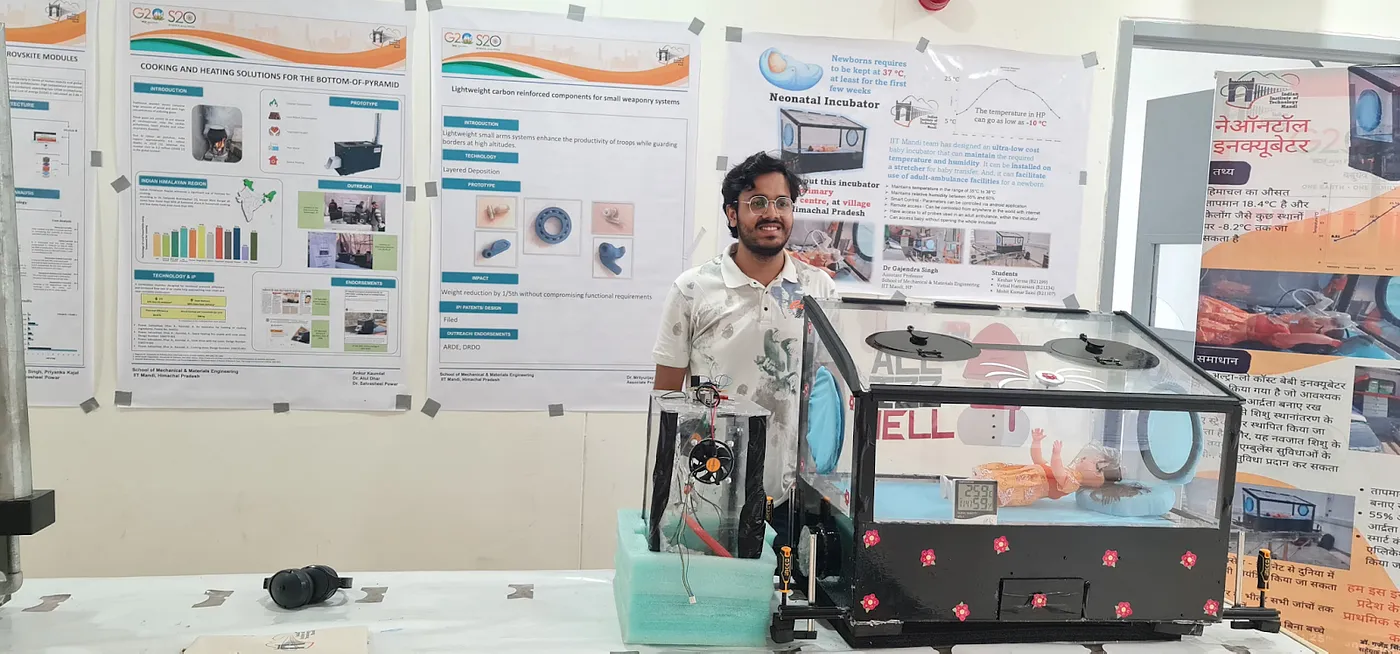
Presentation at G20
We received recognition from Stanford for this design (News Article) and a prototyping grant CPS Prayas (Rs. 5L).
Second Design (Current)
For this design we wanted to make it as close as possible to what we expected our product to have. Here’s what all we wanted to achieve:
- A touch display for intuitive control and monitoring of the device. Create an app.
- Extend remote control and monitoring to include baby vitals and live video feed.
- Get humidity control to work
- Improve design, structure, portability and adaptability of the device.
- Make it a 2-in-1 radiant warmer convertible when intensive care is not needed.
- Include Battery Backup to sustain power-cuts and transportation in non-ambulance vehicles.
- Include support for oxygen saturation control.
- Inclusion of Photo-Therapy with the device.
- Inclusion of Bed Tilting Mechanism.
By this time we had received a grant of Rs. 5 Lakh from CPS Prayas and we were using it to perform experiments, conduct field surveys and build our product.
Our Approach:
- Before we dived into the technicals we started understanding the problem better. We visited GIMS Noida, AIIMS Bilaspur, Mandi Zonal Hospital, Shri Lal Bahadur Shastri Govt. Medical College & Hospital Nerchowk and PHCs in the Mandi district. Filed RTIs and understood the pain points of all stakeholders to address everyone’s challenges.
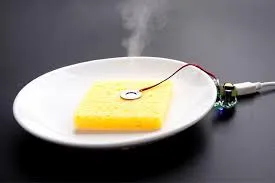
- On the technical front we wanted to figure out the humidity problem first and foremost. Having failed with our earlier approach we started searching for better alternatives and started looking at products already in the market when we found out about piezo-electric humidifiers. Hence we started planning our product around this.
3. Secondly, from the first view on our objectives it was pretty clear that we needed a good amount of compute to handle all the modalities of the data and intense amount of networking required. As a first principle we tried to go with NodeMCUs and STM32 Microcontrollers to balance costs and keep everything optimised. But very soon we realised that we needed a proper computer to handle complex data and networks and it would take us ages to write software for low level controllers like these. Hence, we turned towards Raspberry Pi, or more specifically Raspberry Pi Compute Modules. With a linux board at hand we also got the ability to work with cloud platforms such as AWS for traversing our data. After 4–5 months of intense R&D we finalized our software architecture:
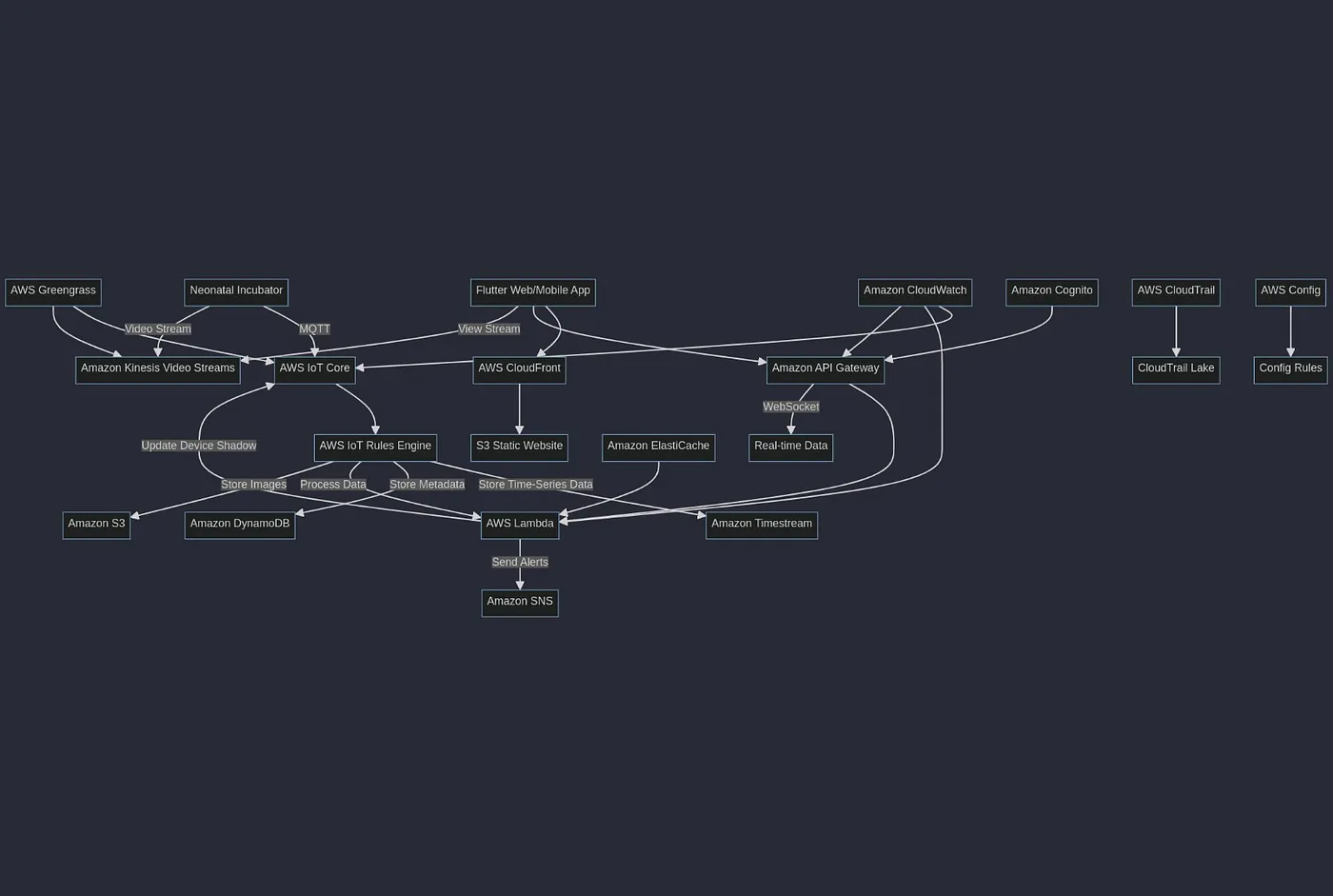
Our Rpi + AWS combo took care of all the stuff related to computation. The linux abstraction made it easy for us to include an intuitive app, touch control and camera meanwhile all the network related heavy lifting was done on AWS which also ensures HIPAA compliance.
4. After we had our computational aspects figured out we sat down to figure out how our electronics would play out. It was tricky because throughout the board we had everything running at different power levels and converting between AC/DC for different aspects was a challenge in itself. Nonetheless, after a lot of failed designs we did get our system up and running:
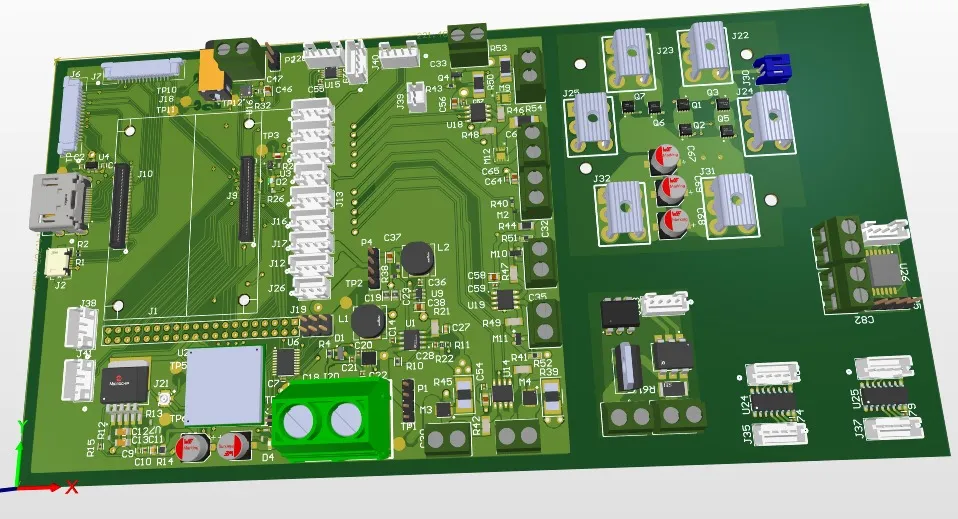
Our First PCB, Failed Partially. Used to fry itself while switching between sources.
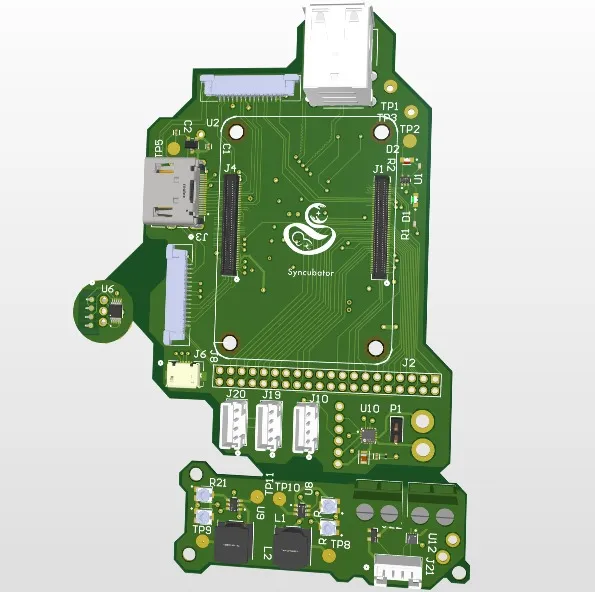
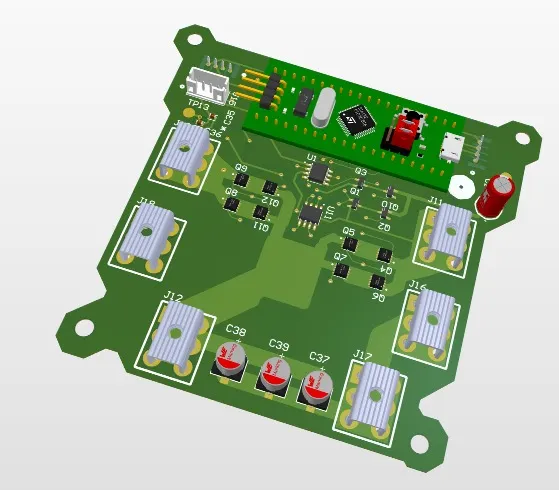
Successive designs that saved us eventually
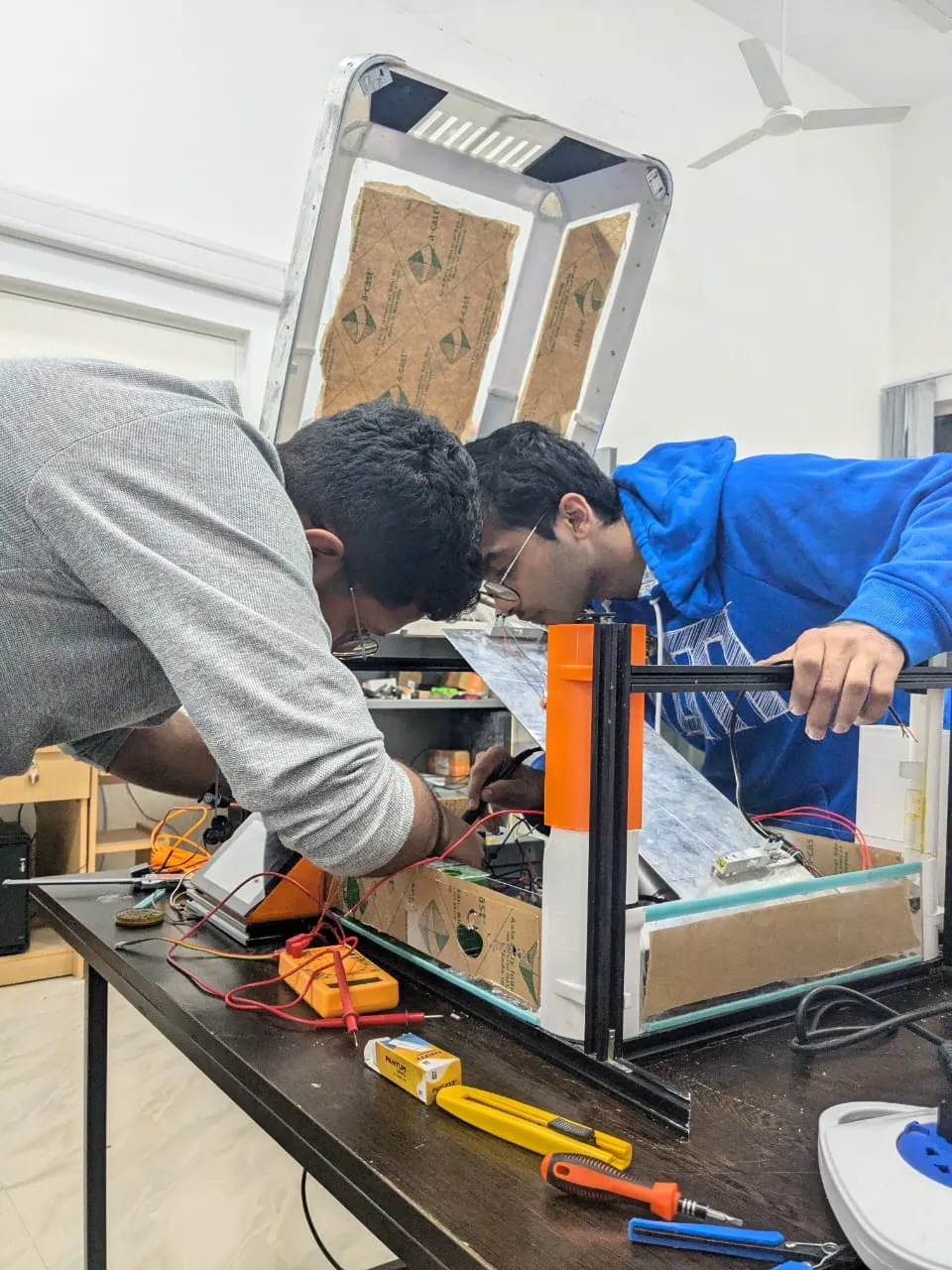
Me and Dheeraj putting stuff together
Due to manufacturing constraints at our college, we had to carefully evaluate and select production processes that can be executed in-house while remaining cost-effective, both in terms of manufacturing and material expenses.
For the aluminum frame, we utilized machined aluminum processed through milling and assembled it using various L-brackets. This time, our focus is not only on ensuring the prototype’s functionality but also on enhancing its aesthetics. Consequently, improving the visual appeal of the prototype has added complexity to the manufacturing process.
To address this, we incorporated 3D printing for intricate components such as corners and gates — parts that would otherwise be difficult or expensive to machine. However, 3D printing presents its own challenges, particularly size constraints with available printers. Some components are too large to be printed in a single piece and would require outsourcing, which is prohibitively expensive and beyond our budget.
To overcome this limitation, we opted to split larger components into multiple smaller parts and assemble them through fastening techniques. For reference, the main hood of the incubator comprises 24 individual 3D-printed parts that have been joined together.
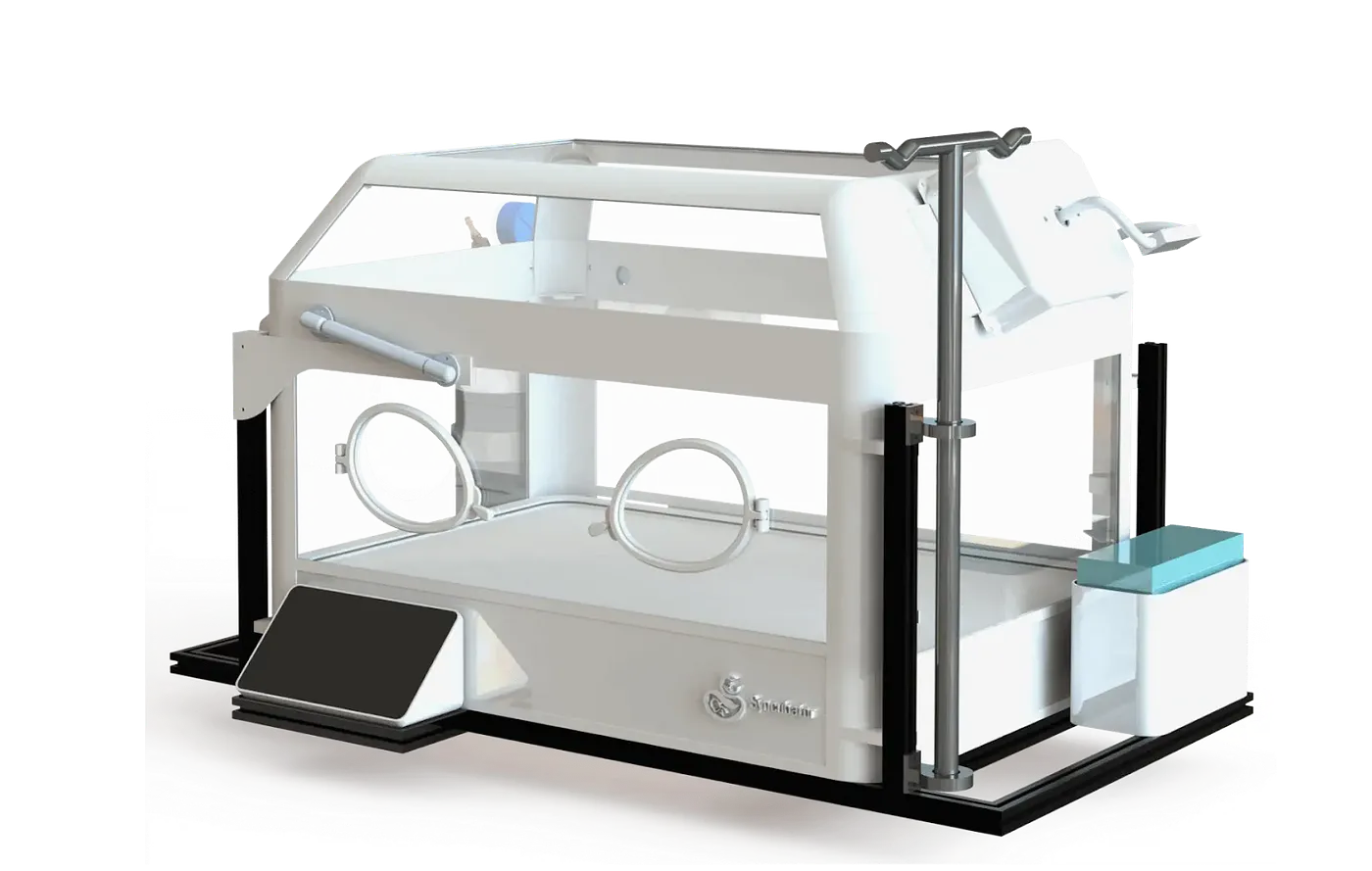
Another key challenge we encountered was designing the tilting mechanism. Doctors require a 12-degree bed tilt for optimal functionality. However, due to the limited height available at the base, we had to carefully evaluate different translatory and rotary mechanisms to achieve this movement efficiently.
Initially, we considered using a window-lifting mechanism, but it involved multiple moving parts, making it prone to mechanical failures. After brainstorming various alternatives, including a rack-and-pinion system and a cam-follower mechanism, we ultimately decided to use a linear actuator. While this choice increases the incubator’s power consumption, it ensures a mechanically robust and reliable system.
We aimed to design each component as an independent module — functioning as standalone entities that, when integrated, create a powerful and cohesive product.
For instance, the phototherapy unit has been made fully modular, allowing it to be easily mounted onto the aluminum frame using a simple clip mechanism. Similarly, we have optimized the warmer assembly for seamless integration. On the right side of the gate, which aligns above the mattress when opened, we have incorporated a sliding mechanism. The heater is designed to slide into this slot, and by connecting the male and female connectors, it seamlessly integrates with the main control system to efficiently heat the entire unit.
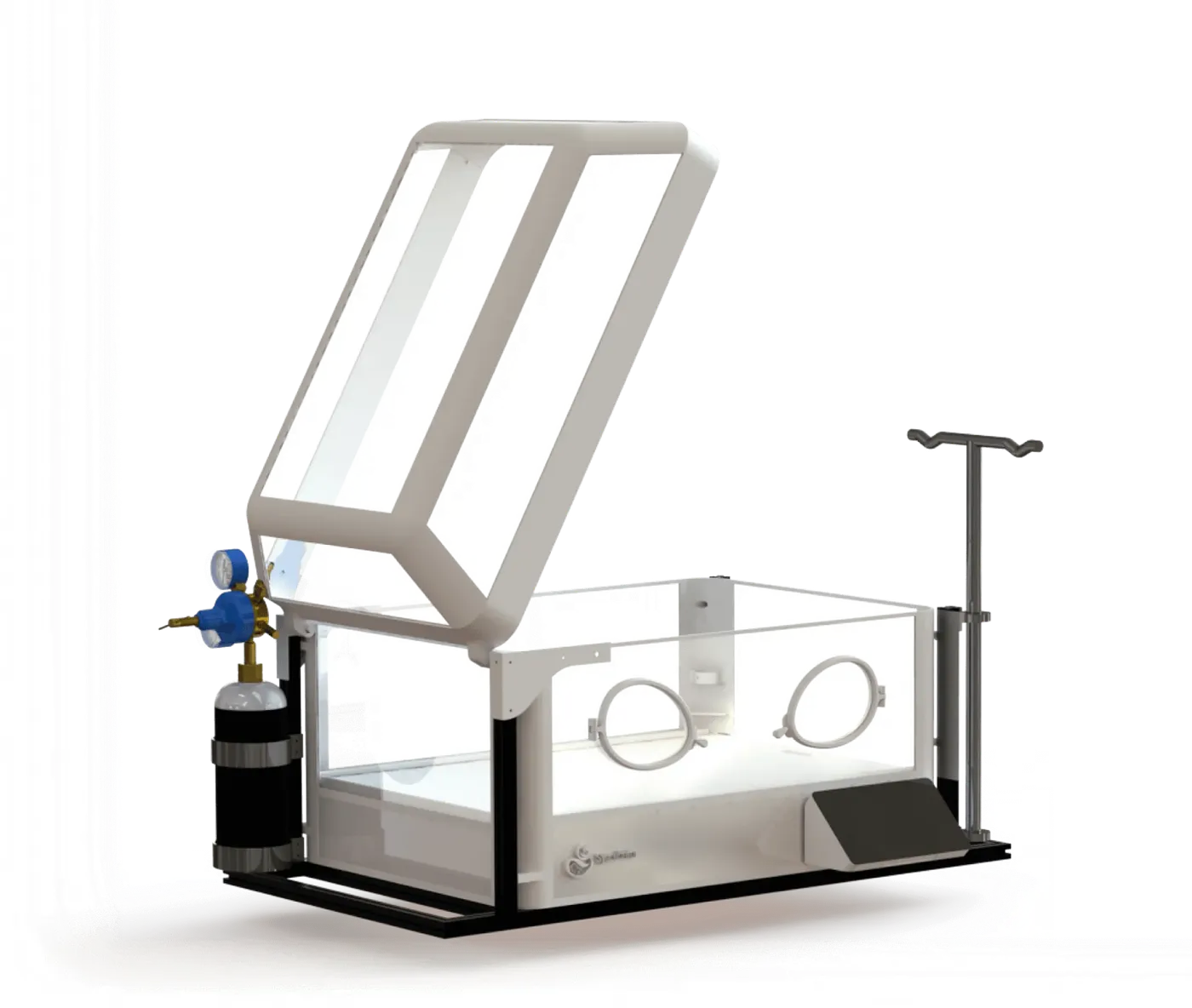
Outcomes:
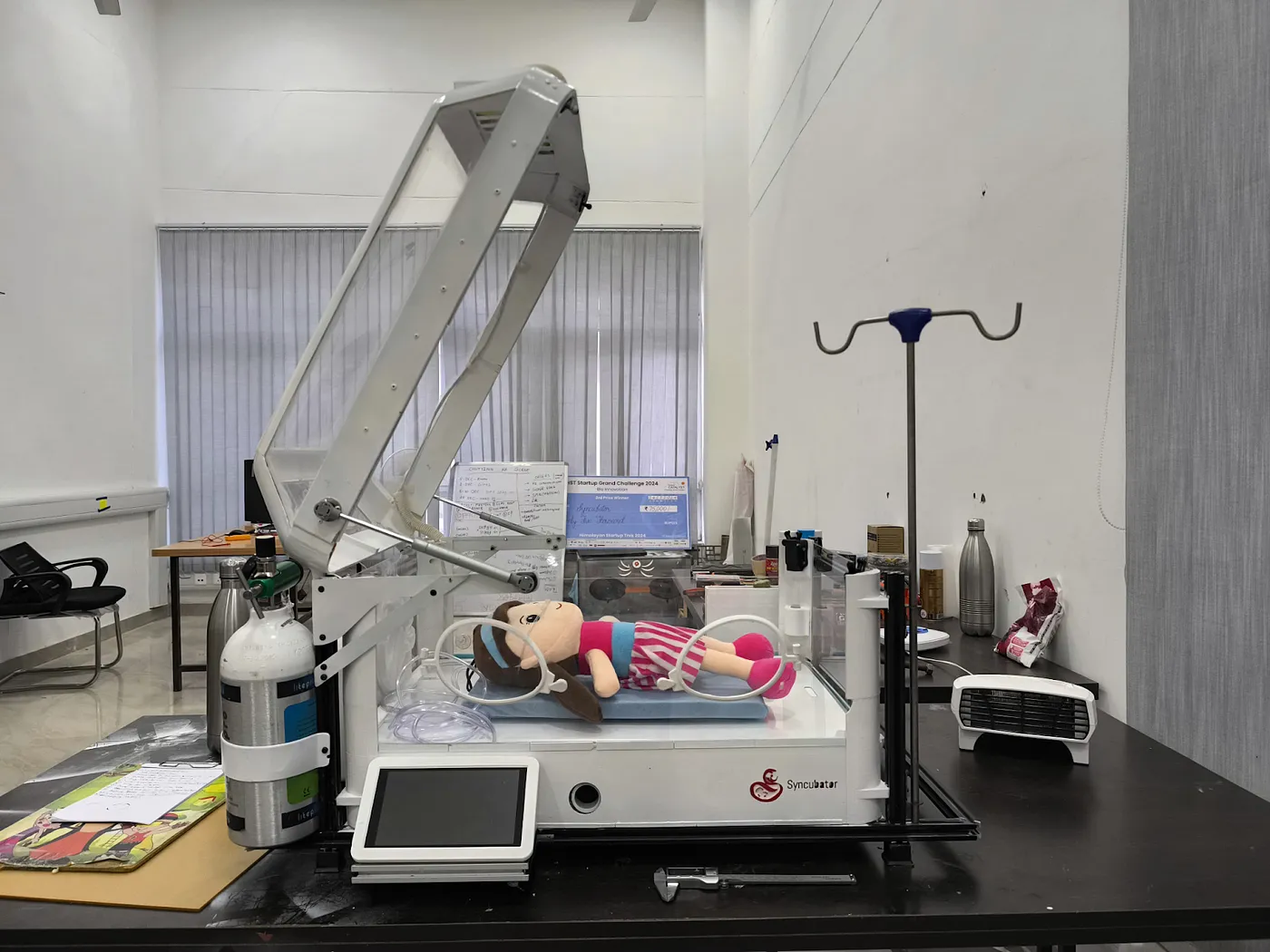
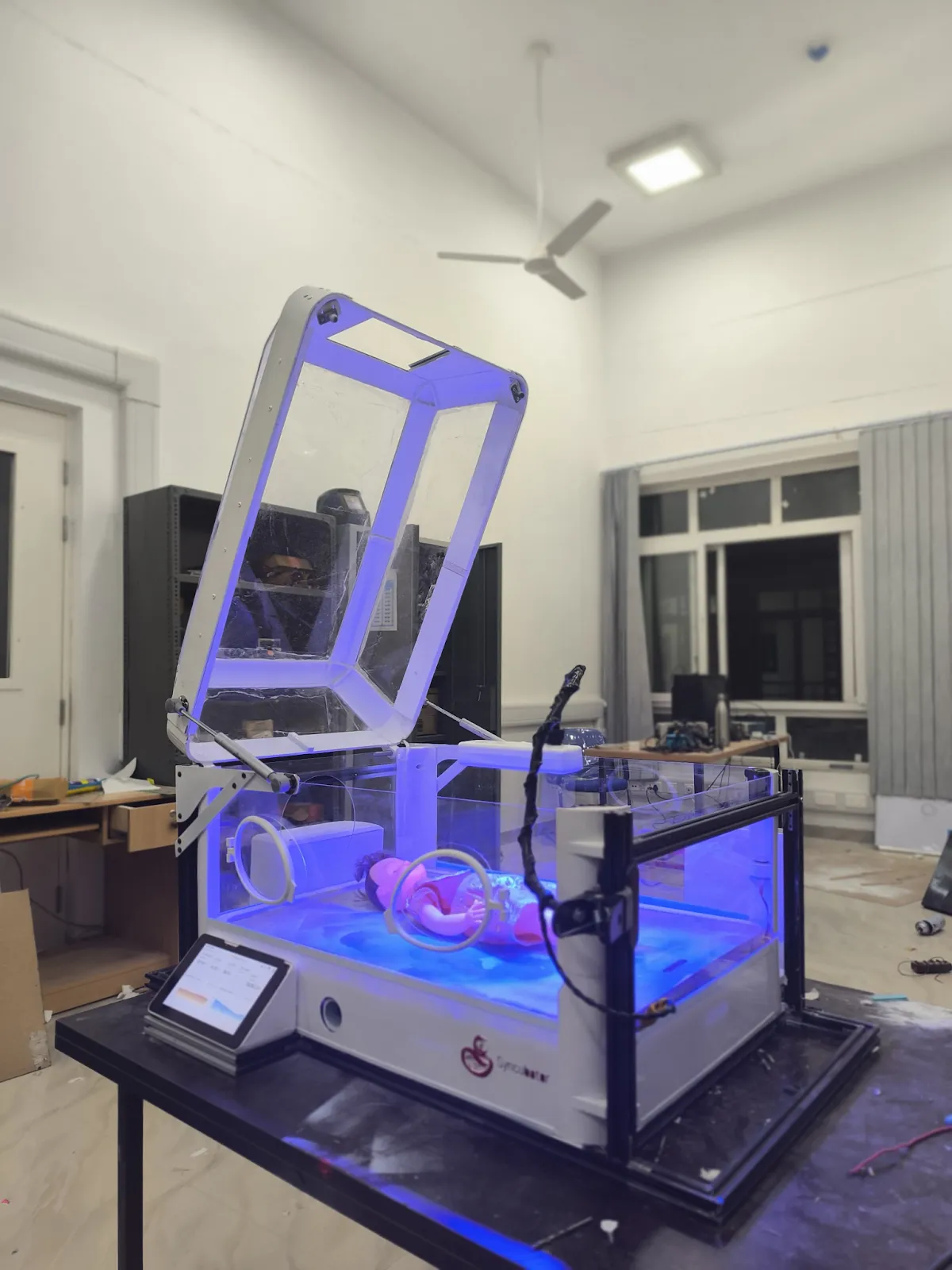
Final Looks
This time as well we didn’t meet all our objectives but now we know how to get everything done. We gained a lot of knowledge around electronics, cloud architecture and manufacturing aspects of product development.
Our Shortcomings:
- We couldn’t increase humidity beyond 47%. But we know that we just have to double our humidification capacity to tackle this.
- The radiant warmer gets way too hot and burns the insulation behind it.
- Fans were way too noisy.
- Lights couldn’t be dimmed properly because Rpi uses software based PWM.
- We were spending way too much on power conversion. We needed to sort this out.
- Positioning of Phototherapy is also very vague.
Nonetheless, this prototype did get us a lot of attention:
-
We finished 2nd runners-up at Himalayan Startup Trek, IIT Mandi Catalyst after giving an absolutely dead pitch (due to us pulling an all nighter to finish the prototype). Almost every hospital that visited gave us a good review of the product.
Media links: syncubator.in/news and ETV Bharat
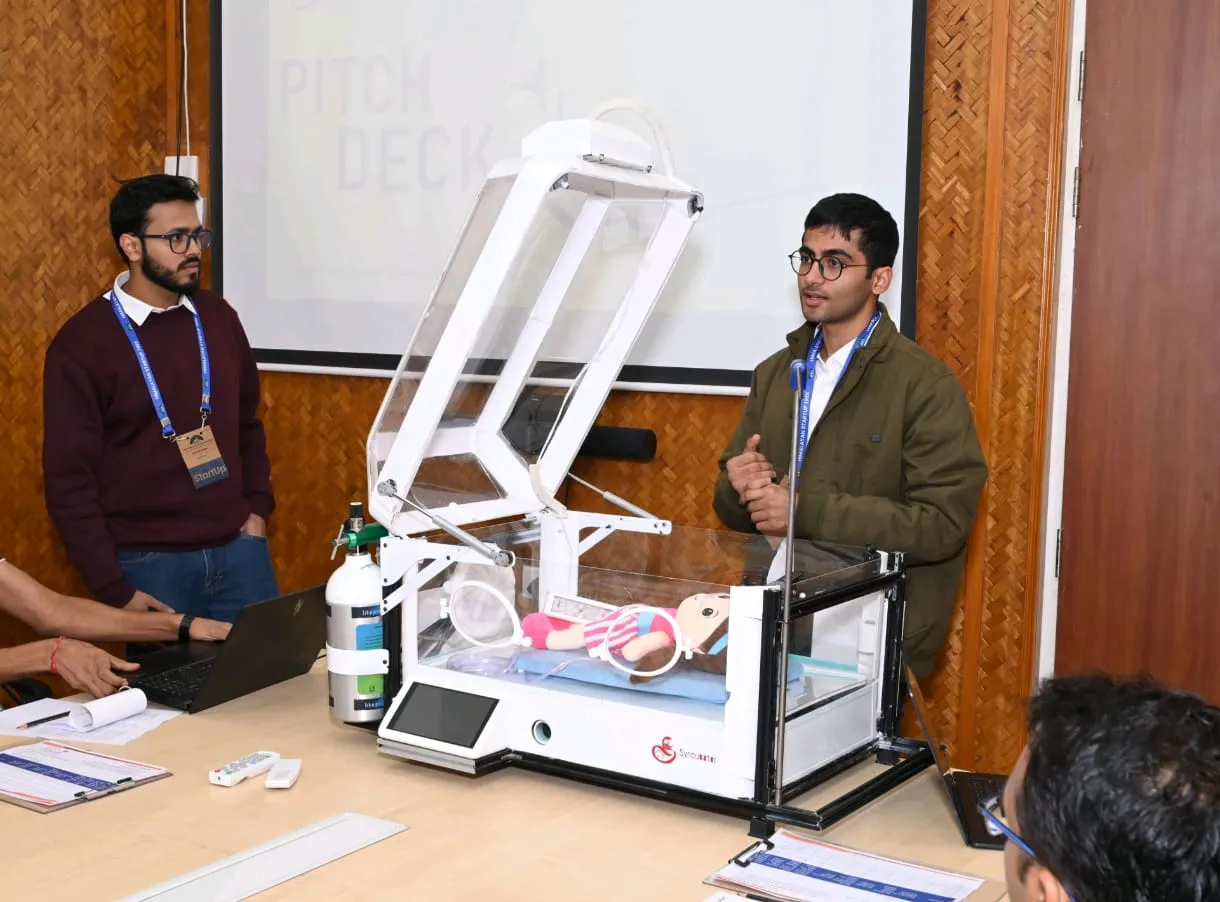
Me and Keshav delivering an absolutely dead pitch
2. This also helped us take better feedback from doctors and we got to know that we had some features which were a lifesaver, some under functional and some were just an overkill that could be dialed down a notch.
3. It also helped us get a lot of grant money:
- NIDHI Prayas (Rs. 10L)
- HST Himalayan Startup Trek (Rs. 75K)
- Emergent Ventures ($20,000)
- WTFund. We couldn’t get through the top 3%, but it felt like an achievement.
The MVP
After the second design we started working on our MVP being manufactured in collaboration with Unimetals Pvt. Ltd. on contractual basis. These are our current designs:
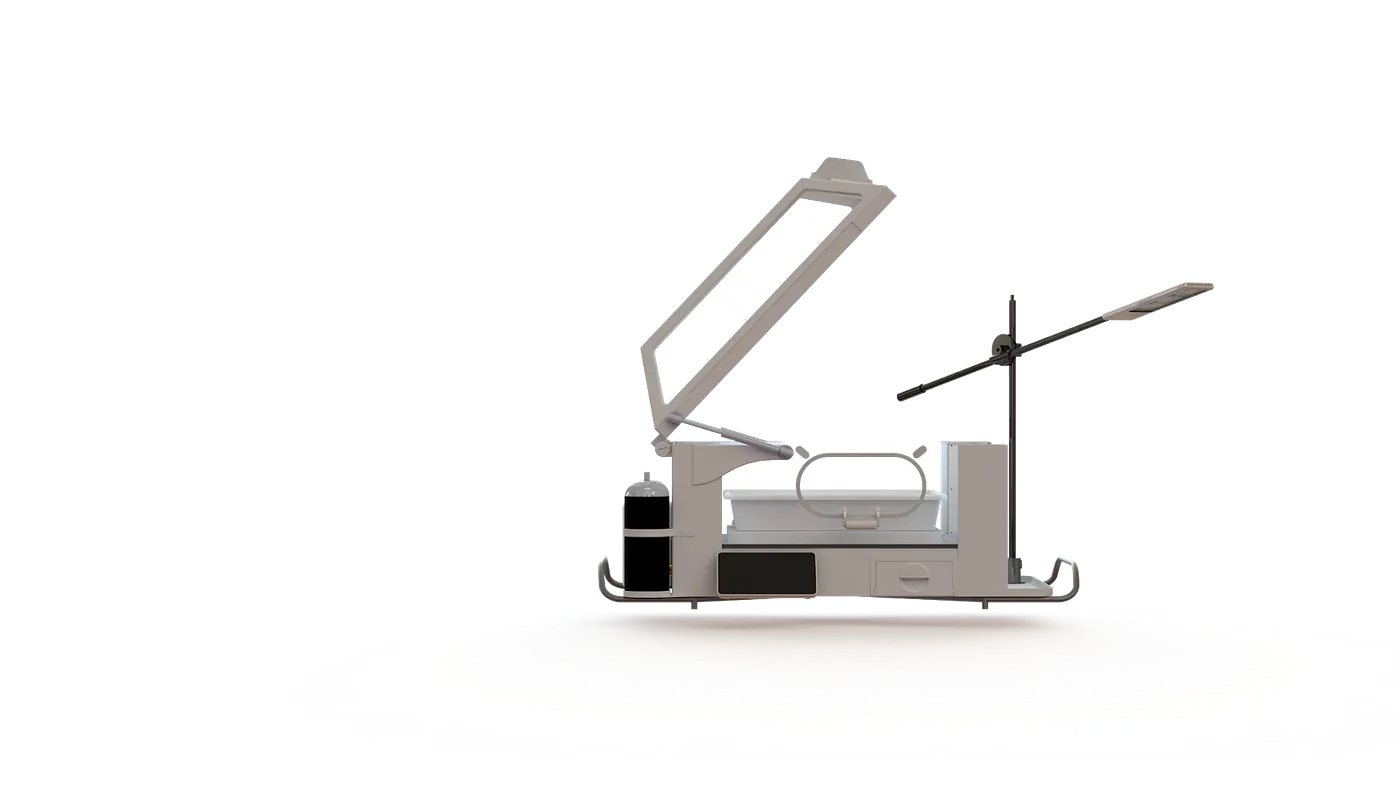
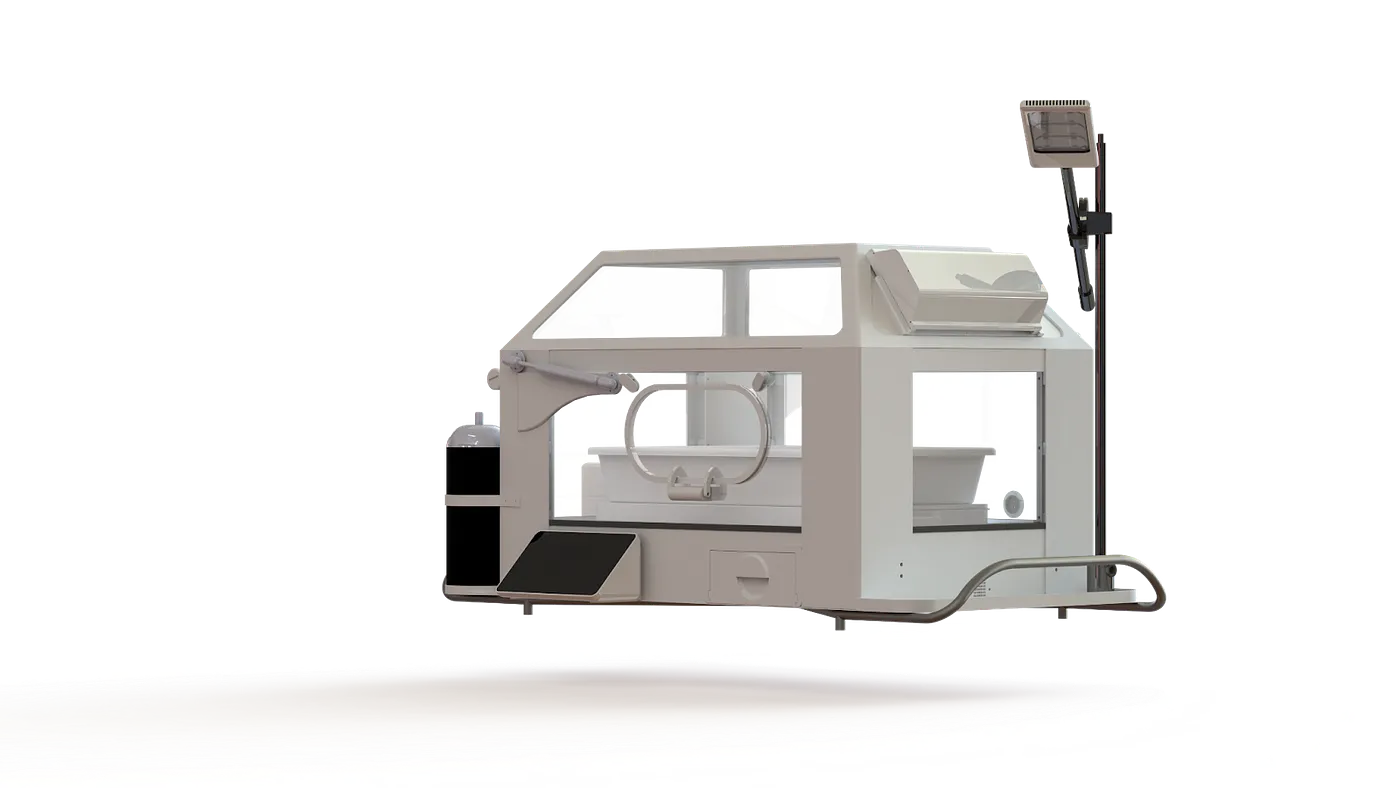
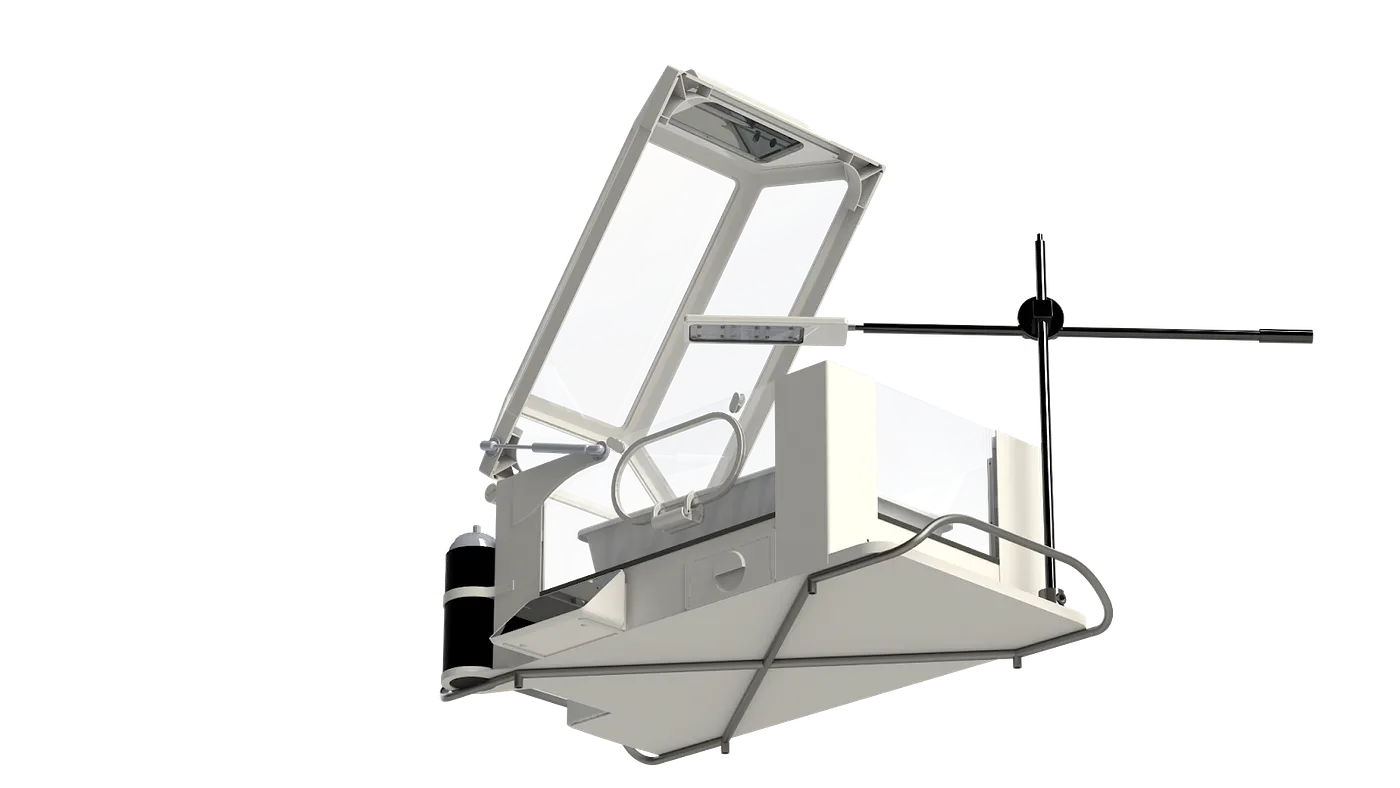
We are currently working on making these designs a reality while dealing with compliances and regulatory protocols set by CDSCO. We are taking things to the next level in terms of quality. We are using top of the line components and incorporating all the things we have learnt from our mistakes earlier.
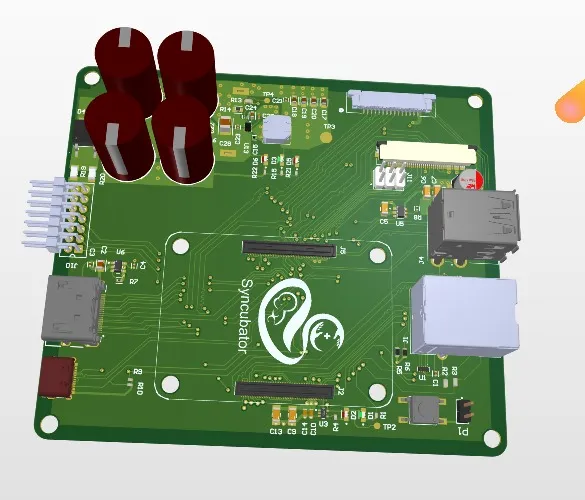
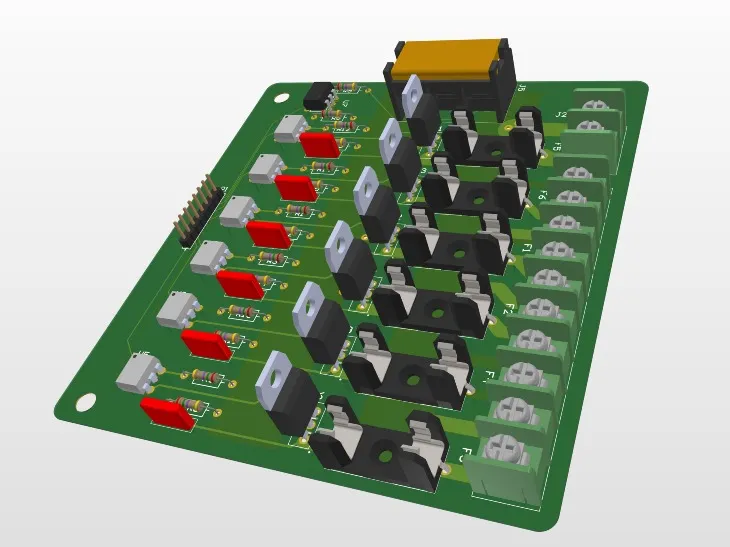
I discontinued my journey at Syncubator from here on amicably due to personal reasons and I am now actively looking to solve some other problem. I am about to graduate from IIT Mandi in 20 days or so and I couldn’t be more excited to work on another problem!
Thank you for reading till here!